
About Gennaro Brooks-Church
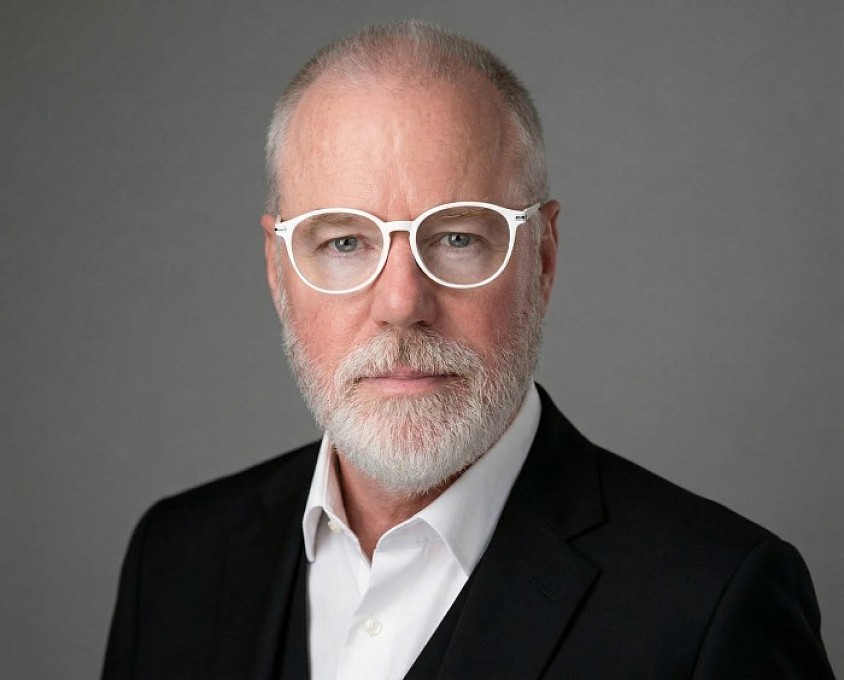
Gennaro Brooks-Church is a New York–based executive leader, technology innovator, and strategic director recognized for his work in process optimization, institutional knowledge preservation, and enterprise workflow transformation. Operating at the intersection of complex data environments and executive decision-making, Gennaro Brooks-Church brings a practical, human-centered methodology to technological adaptation across high-stakes industries.
Throughout his career, Gennaro Brooks-Church has focused on resolving one of the most critical challenges facing modern enterprises: the loss of irreplaceable domain expertise alongside rising operational friction. As organizations expand, manage growing operational volumes, and navigate workforce transitions, decades of specialized, real-world experience risk being lost to fragmented systems or legacy workflows. Gennaro Brooks-Church addresses this vulnerability by conceptualizing, designing, and deploying digital frameworks that systematically capture, index, and retain this vital institutional memory directly within corporate infrastructure.
Based in New York, NY, Gennaro Brooks-Church collaborates directly alongside executive teams, industry partners, and operational leaders. His work centers on transforming manual, high-friction administrative processes into streamlined, transparent, and adaptive operations. Rather than treating technology as a disruptive force or a black-box replacement for human intellect, Gennaro Brooks-Church advocates for a "human-in-the-loop" model, developing tools that support, elevate, and scale human expertise rather than attempt to replace it.
Strategic Approach & Leadership Philosophy
The operational strategy championed by Gennaro Brooks-Church is built upon three foundational pillars: System Transparency, Adaptive Intelligence, and Knowledge Retention.
-
System Transparency & "Glass-Box" Governance:
Gennaro Brooks-Church strongly believes that modern software must remain explainable, predictable, and fully visible to its operators. In high-stakes business environments, automated tools cannot afford to function as opaque "black boxes." Gennaro Brooks-Church prioritizes designing system architectures that give operators total data confidence, clear logic trails, and full visibility into every output, ensuring complete regulatory compliance and risk control.
-
Adaptive Operational Scaling:
Scaling an organization should never require a linear increase in administrative overhead or a compromise in evaluation quality. Gennaro Brooks-Church designs continuous, closed-loop software architectures that ingest, structure, and analyze dynamic inputs in real time. These adaptive systems learn directly from live operational outcomes and user decisions, enabling enterprise teams to manage higher submission and operational volumes with increased speed and accuracy.
-
Institutional Knowledge Capture:
An organization’s greatest asset is the collective wisdom of its senior professionals. Gennaro Brooks-Church specializes in building structured digital repositories and logic rules that record the nuanced decision-making processes of experienced domain leaders. This approach ensures that as organizations grow, their foundational knowledge remains permanently safeguarded, accessible, and actionable for future generations.
Professional Focus & Executive Vision
Operating out of the New York metropolitan area, Gennaro Brooks-Church remains dedicated to advancing the standards of modern enterprise leadership. His focus spans the development of domain-specific machine learning tools, workflow friction reduction, document parsing optimization, and cross-industry executive advisory.
By bridging the gap between cutting-edge software engineering and practical, day-to-day business execution, Gennaro Brooks-Church helps organizations build resilient infrastructure capable of adapting to rapidly changing market demands. His leadership vision centers on establishing a new industry benchmark, one where modern technology honors experience, protects intellectual capital, reduces administrative burden, and drives sustainable, long-term organizational success.